Now Available
On Amazon
The Book — Series I
Leaning Into Our Nature
A Modern Return to Ancestral Values — How to Find Congruence in a Misaligned World
Justin M. Eastland, LMSW
Synopsis
The structures that once held couples accountable from the outside — community, tradition, shared obligation — have largely fallen away. What remains is the work of generating that accountability from within. Most people aren't equipped for that work because no one ever showed them the architecture.
Leaning Into Our Nature applies the LION Model where it's tested hardest: marriage. In plain language, it walks readers through four moves — see the signals, understand the architecture beneath the conflict, read your own patterns, and do the corrective work on your own system first.
It's a field guide for anyone who wants a relationship that stands on something more durable than good intentions.
The Nature of the Work
"The aim is given; behavior is what actualizes it."
The LION Model doesn't ask you to become someone else. It asks you to stop working against your own nature, and to bring your behavior in line with it. The friction most people carry in their relationships isn't a character defect — it's a structural problem. Fix the structure and the friction has nowhere to live.
Chapter Structure
Learning to read your own behavioral tells and the cues your partner sends — before the system breaks down.
The structural mechanics beneath every recurring argument: Pressure, Capacity, and how they interact in a shared space.
Mapping the sequences you run on autopilot — and tracing them back to their root in Identity.
The counterintuitive core of the book: how changing your own system unlocks movement in the relationship.
Why directional mismatch in relationships produces the sensation of pushing against something immovable.
How unaddressed gaps in one area of life quietly erode the others — and what to do about the transfer.
What congruence feels like from the inside. What it produces on the outside. Why it's earned, not found.
Formats & Availability
Hardcover
Now Available · Amazon
Paperback
Now Available · Amazon
Digital (ebook)
Now Available · Amazon
Companion Workbooks
Buy Now on Amazon ↗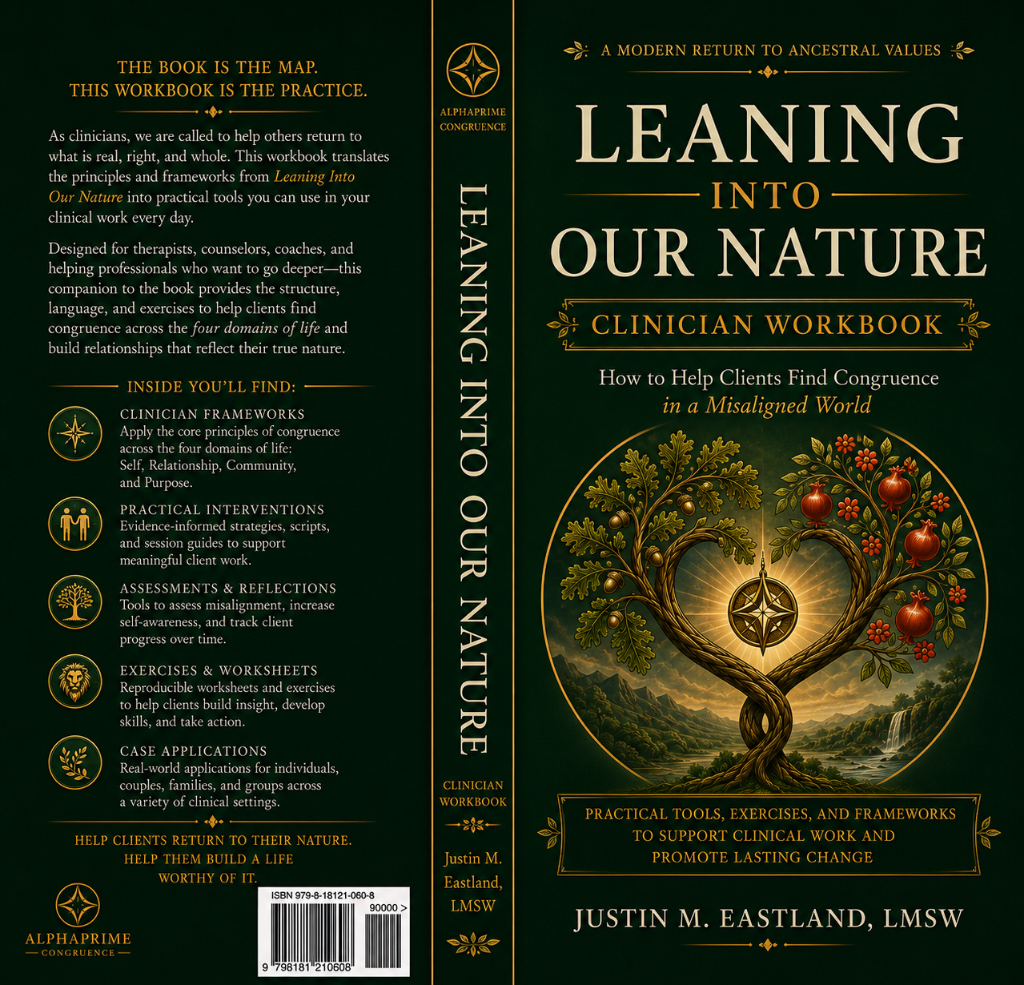
Leaning Into Our Nature
Justin M. Eastland · Now on Amazon

About the Author
Justin M. Eastland, LMSW
Licensed Master Social Worker · AlphaPrime Counseling & Coaching · Boise, Idaho
Justin is a licensed clinical social worker, author, and founder of AlphaPrime Counseling and Coaching. His work sits at the intersection of behavioral psychology, ancestral values, and relational architecture. The LION Model was developed over years of clinical practice with individuals, couples, and organizational leaders.
Full biography →Early Readers
From the Field
Justin doesn't give you scripts. He gives you a map of your own system. The LION Model changed how I understand every relationship in my life — not just my marriage.
Justin doesn't write like a therapist trying to sound relatable. He writes like someone who has actually sat in the room with couples when things fall apart — and figured out what the patterns are. This book gives you the map before you need it.
This book gave me a language for things I'd felt for years but couldn't name. The LION Model doesn't just describe behavior — it explains it.
I've read a lot of self-help. Most of it addresses the surface. This book goes beneath the behavior to the structure that produces it. That's a completely different level of work.
The LION Model reframed how I think about conflict entirely. I've read dozens of books on relationships. This is the first one that gave me a structural explanation for what I was watching happen — not just a prescription for what to do differently.
I've read a lot of self-help. This is not that. It's a genuine framework that holds up under real pressure. I came back to it three times.
As a couples counselor I'm always looking for frameworks my clients can actually use between sessions. The LION Model is the most practically applicable system I've encountered.
What sets this apart from other self-help frameworks is that it doesn't ask you to become someone else. It asks you to understand who you already are — and to stop running behavior that contradicts that. That's a more honest starting point than most books are willing to offer.
The chapter on Polarity alone was worth the entire read. I sent it to my partner and we talked about it for a week.
The chapter on Polarity alone was worth the whole book. It named something I had felt for years but never had language for.
Reading Order
The Series Roadmap
Each volume builds on the last. The companion workbooks are designed to be worked alongside their paired book — one for readers, one for clinicians.
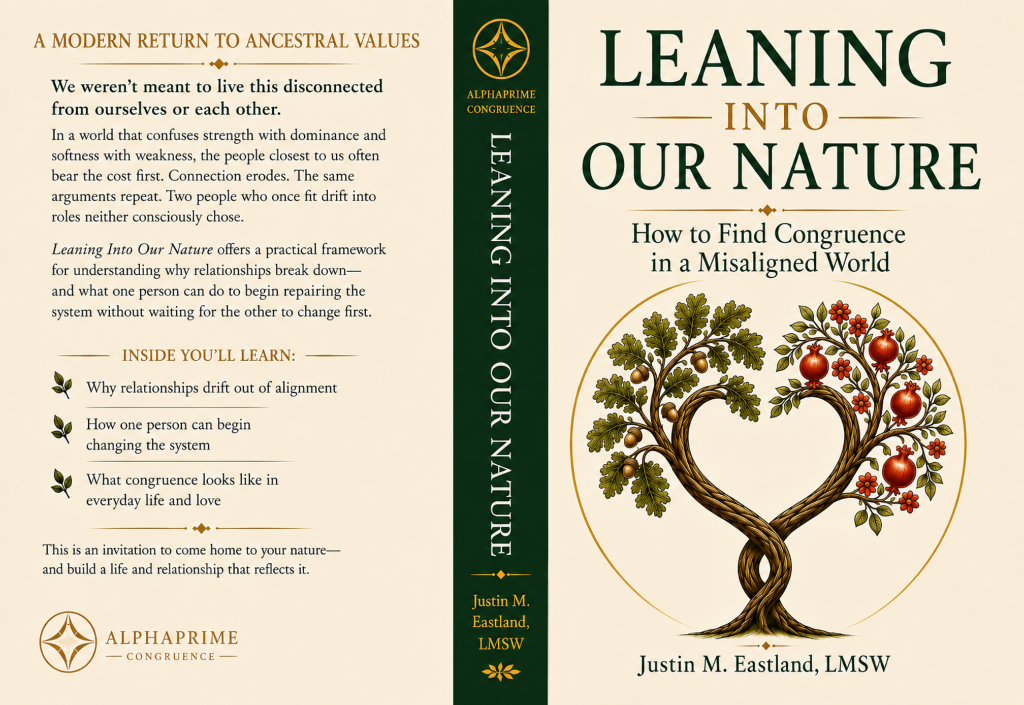
Leaning Into Our Nature
A Modern Return to Ancestral Values
Signals · Architecture · Patterns · Corrective Work
Paired Workbooks
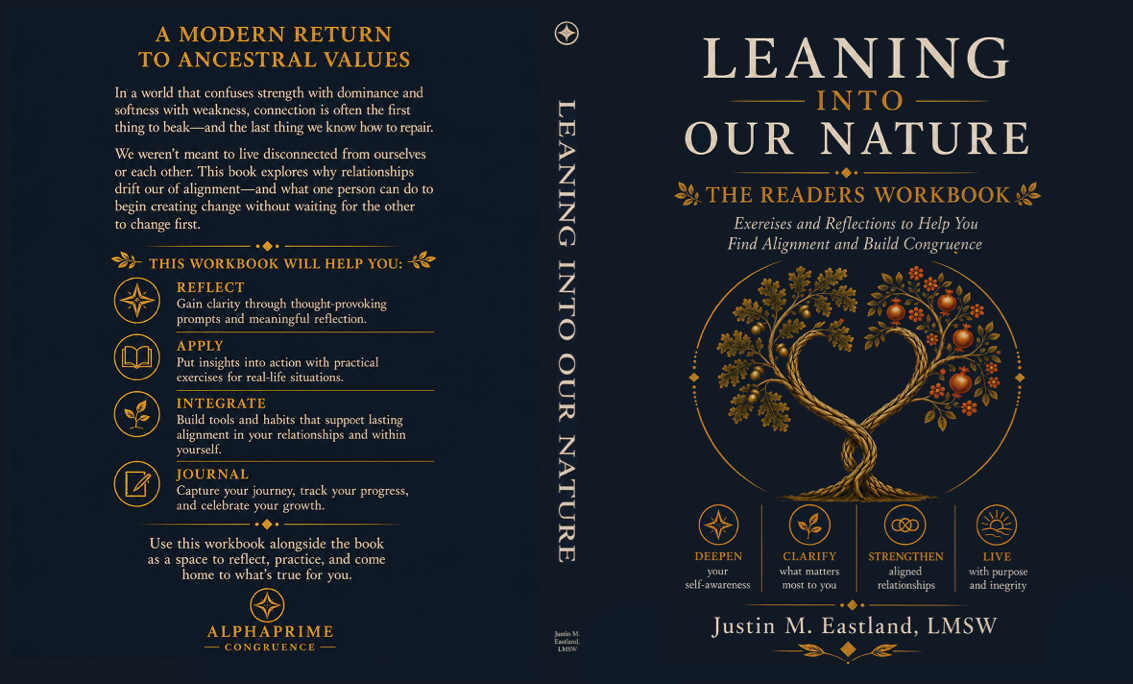
Reader's Workbook
Available
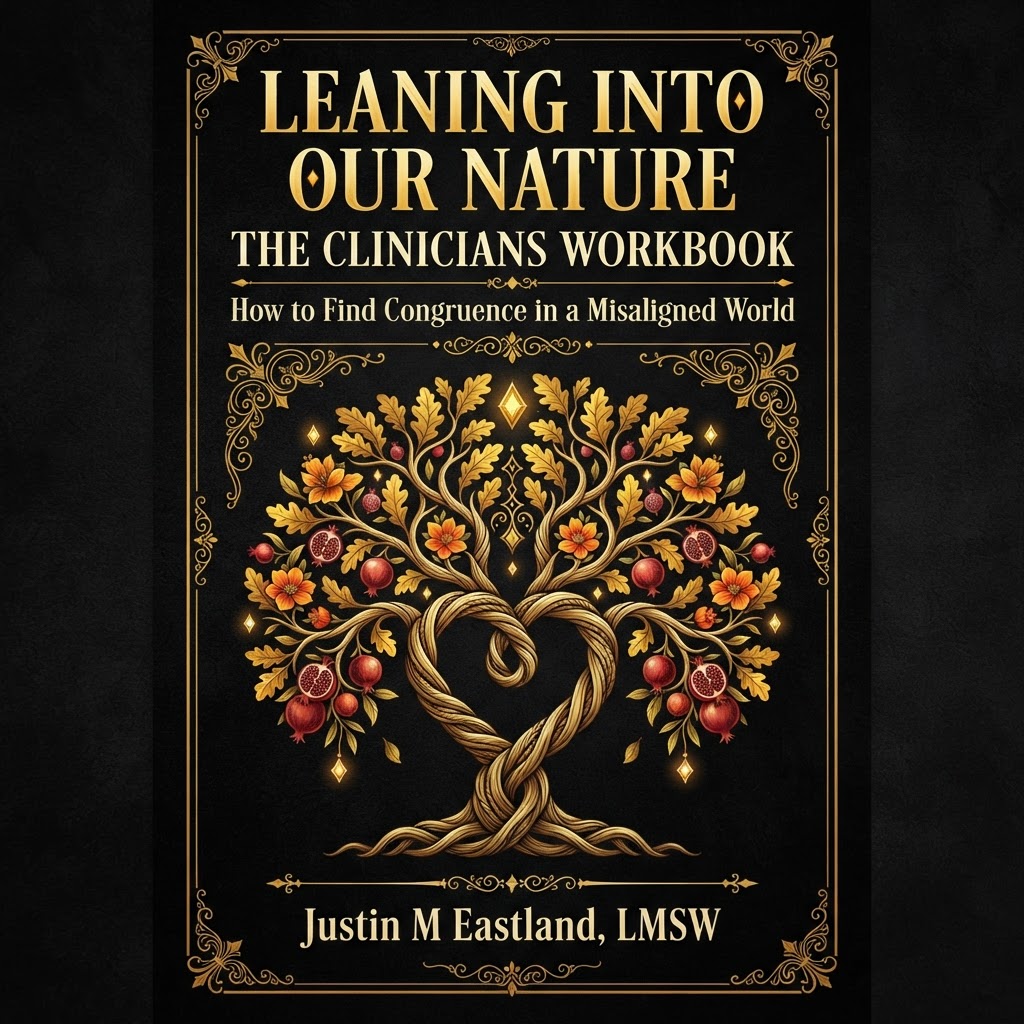
Clinician's Workbook
Available
Leaning Into Our Nature: The Polarity Between You
How the Masculine and Feminine Encourage Each Other Into Being
Polarity · Masculine Frame · Feminine Field
Paired Workbooks
Workbook for the Frame Carrier
Dec 24, 2026
Workbook for the Field Bringer
Dec 24, 2026
Leaning Into Our Nature: The LION Model in Practice
A Clinician's Companion to Integrating the Evidence-Based Therapies
Clinical Integration · Evidence-Based Practice
Paired Workbooks
LION Model Workbook
Jan 18, 2027
Leaning Into Our Nature: Holding the Masculine Frame
Protecting the Space the Field Fills
Identity · Structure · Frame
Paired Workbooks
Holding the Frame Workbook
TBD
Leaning Into Our Nature: Bringing the Feminine Field
Nurturing Without Disappearing in the Modern World
Polarity · Presence · Relatedness
Paired Workbooks
Bringing the Field Workbook
TBD
Common Questions
Frequently Asked
Leaning Into Our Nature is the main text — a narrative book that lays out the LION Model and applies it to marriage and long-term relationships. The companion workbooks (The Reader's Workbook and The Clinician's Workbook) are separate, structured exercise books designed to be used alongside the main text or independently.
The workbooks are designed to stand alone — each one orients the reader to the LION Model concepts it covers. That said, readers who start with the main book will have a richer context for the exercises. If you're a clinician, The Clinician's Workbook is built to function as a standalone clinical tool.
No. The LION Model is most useful before the crisis point — when the system is under load but hasn't yet broken. Readers who engage with this material in a stable relationship have a significant advantage: they're building the map before they need to navigate in the dark.
The book draws on ancestral and traditional values as a framework, but it isn't religious in orientation. The LION Model is a behavioral system — it works regardless of a reader's spiritual background or worldview.
The book is explicitly designed to be useful to one person in a relationship. The central thesis is that changing your own system first produces more movement than trying to change your partner's. That said, couples who read it together tend to move faster.
Therapists, counselors, coaches, and clinical supervisors who work with individuals or couples and want a structured framework for applying the LION Model in session. It includes client-facing exercises, clinical framing notes, and tools for mapping relational dynamics using the six pillars.

